

SmartX is an independent AI trading terminal for prediction markets. It ranks traders by their realized profit and loss and their win rate, streams what those proven wallets are doing live, and pulls several prediction-market venues into one screen with charts, order books, and a market radar. You do your research and place your trades in the same window, at a flat 0.5% fee, with global access.

SmartX
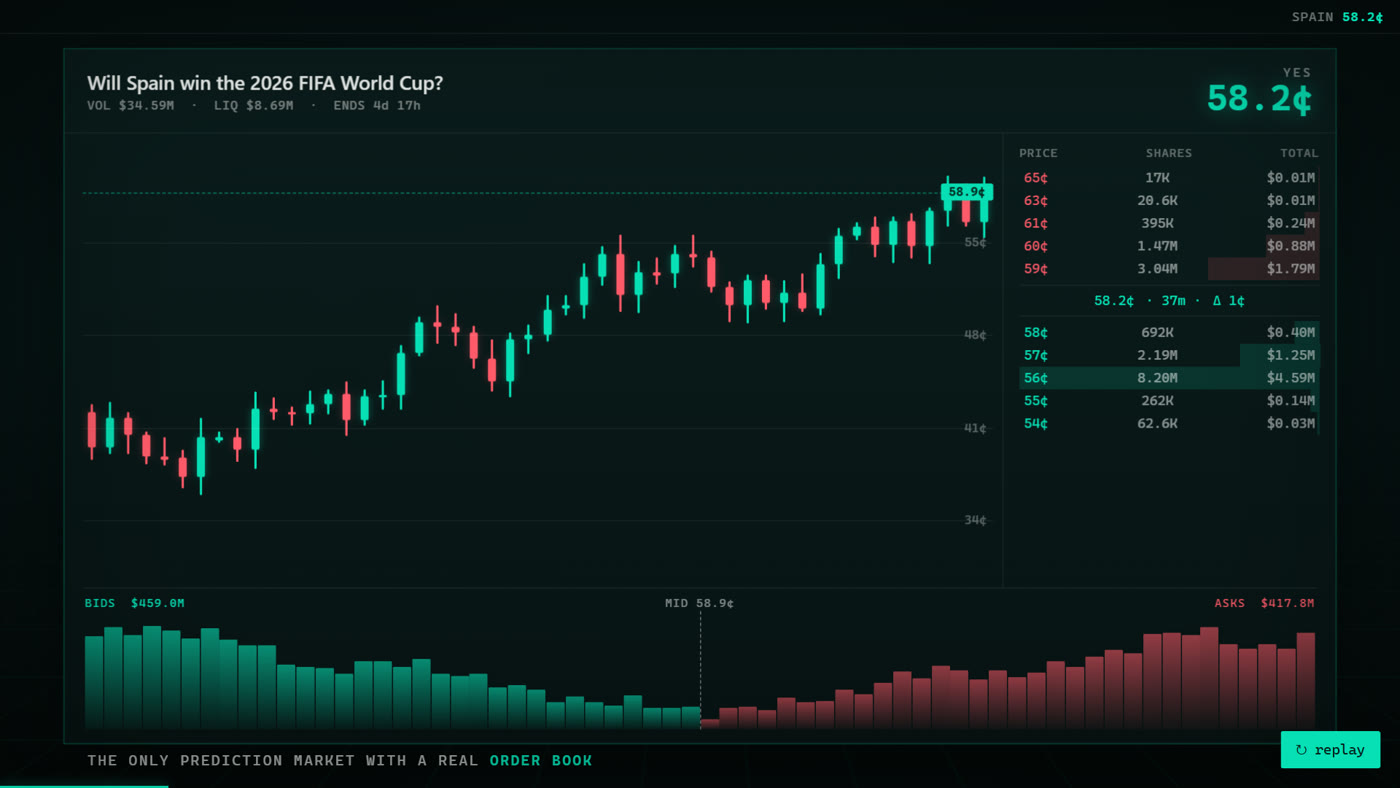
What SmartX is, and who it is for
Most people meet prediction markets through a plain betting page. You open an event, read the odds, and place a bet. That works, but it is built for browsing, not for research. SmartX is a different layer. It is a full trading terminal that sits around the order box and gives you the tools that active traders usually stitch together by hand: who the sharpest wallets are, what they are doing right now, which markets are heating up, and clean charts to read all of it.
The important word is independent. SmartX is its own product with its own technology. It is not a skin on someone else's site, and it does not borrow another venue's markets or prices. It brings venues together and adds a research layer on top, then lets you trade from one place. It lists availability as global, so traders outside the United States can use it.
Who is it for? Active prediction-market traders. If you place a couple of bets a year on an election or a big sports final, a simple betting interface is all you need. If you trade often, want to follow other traders, and care about paying less in fees, SmartX is aimed squarely at you. It is a newer venue, live since 2026, so it is smaller than long-running venues, but it is available right now and you can start today. The trade you are making is a shorter track record in exchange for tools those venues do not offer.
Smart-money tracking, the signature feature
The feature SmartX is built around is smart-money tracking. In plain terms, it helps you see what proven wallets are doing before you decide anything yourself.
SmartX ranks traders by their realized profit and loss, the money actually taken off the table, and by their win rate, how often their closed positions ended in the money. That ranking is the starting point. Instead of guessing who is worth watching, you can sort by wallets that have a real record and read their book directly. Open any address on the leaderboard and you can see the positions it holds now and the history of what it has done before.
On top of the rankings, SmartX streams a live feed of those wallets' trades. When a top-ranked wallet, or a wallet you have chosen to follow, opens or closes a position, it shows up in the feed as it happens. That gives you a running picture of where experienced money is moving, in real time, rather than a static screenshot from yesterday.
One thing to be clear about: this is a research input, not advice, and it is not a promise about any outcome. A wallet that traded well last month can be wrong tomorrow, and rankings depend on the quality of on-chain data. The right way to use smart-money tracking is as a shortlist. It tells you where to look and whose reasoning to study. You still read the market, form your own view, and decide for yourself. SmartX gives you better inputs, not a shortcut past your own judgment.
Many venues, one terminal
The second big idea in SmartX is consolidation. Prediction-market liquidity is spread across more than one venue, and traders who want the best picture usually keep several tabs open. SmartX pulls those venues into a single terminal so you can work from one screen instead of switching back and forth.
In that one screen you get live charts for each market, order books so you can see resting size and where the depth sits, and a market radar. The radar is the piece that ties back to smart money. It flags markets that are on the move: fast price changes, open interest building up, and places where tracked wallets are entering. The point is to surface where attention is going before a market becomes old news. Treat the radar as a list to research, not an instruction to act.
Because everything lives together, the workflow is short. You spot a market on the radar, pull up its chart and order book, check whether any high-ranked wallets are in it and at what size, and if it fits your own read, you place the trade without leaving the page. That is the whole pitch: less tab switching, more time actually looking at the market. SmartX presents each venue's own markets side by side, so you always know where a given market and its prices come from.
Fees and access
SmartX charges a flat 0.5% per trade. There is no separate maker or taker split to reason about, just the one number. For comparison, Polymarket's effective cost tends to sit around 1% once you account for how prices move against you. On a handful of trades a year the gap is small. If you trade often, half a percent versus roughly a percent adds up quickly, and the lower flat fee becomes one of the clearest reasons to use the terminal.
Access is global. SmartX is open to traders in most regions and lists its availability as global, which is meaningful because some venues are limited to specific countries or need a regulated onramp. You create an account, fund it in USDC through the deposit flow in the app, and trade from that balance inside the terminal. As always, check the rules where you live before you sign up, since prediction-market access differs by country and by state.
SmartX vs using Polymarket or Kalshi directly
It is fair to ask why you would not just use a large, established venue directly. The honest answer is that the big venues and SmartX are solving different problems, and SmartX is newer, so weigh both sides.
Polymarket is the deepest venue by liquidity, with 30-day volume around 4.8 billion dollars as of 2026, and it now has a regulated route for United States users. If your priority is raw depth and the widest set of markets, going to Polymarket directly is a reasonable choice. Kalshi is a CFTC-regulated exchange in the United States with its own maker and taker fees, and for US residents who want a regulated venue it is a natural home. Neither of those, on its own, gives you a wallet leaderboard ranked by realized PnL and win rate, a live feed of what those wallets are doing, or a cross-venue radar. That research layer is what SmartX adds.
The honest caveat runs the other way too. SmartX is new. It launched in 2026, so it has a shorter public track record than venues that have been running for years, and it is smaller than the incumbents. That is a real consideration, not a footnote. The way to think about it is not SmartX instead of everything, but SmartX as the terminal you research and trade from, with the large venues as the deep pools it helps you read. If the tools earn their place in your process, the lower fee and the smart-money data are the reasons to stay.
| Feature | SmartX | Polymarket | Kalshi |
|---|---|---|---|
| Fees | 0.5% flat per trade | ~1% effective cost | Maker and taker fees |
| Smart-money tracking | Built in, ranked by PnL and win rate | Not built in | Not built in |
| Multi-venue terminal | Yes, several venues in one screen | Single venue | Single venue |
| Track record | New in 2026, smaller | Deepest liquidity | CFTC-regulated US exchange |
| Access | Global | Global, plus a US regulated route | US regulated |
| Chain | USDC | Polygon | Centralized exchange |
The fastest way to understand SmartX is to open the leaderboard and watch the live trade feed for a few minutes. It is free to look, and it costs nothing to see which wallets rank by realized PnL and win rate.
Open SmartX →Who should try SmartX
SmartX makes the most sense if you trade prediction markets regularly and you want more than a betting page. If you like to follow what proven wallets are doing, if you keep several venues open at once, or if fees eat into your results because you trade often, the terminal is built for exactly that. The flat 0.5% fee rewards volume, and the smart-money tools give you a research edge you would otherwise assemble by hand.
It makes less sense if you place only the occasional bet, in which case a plain interface is simpler and does everything you need. And if you are a United States resident, look first at the regulated routes such as Polymarket's US option and Kalshi, since those are built for your jurisdiction. For everyone else who wants a research-first terminal with a low flat fee, SmartX is worth a look. You can explore the tools and the wallet leaderboard at app.smartx.io before you commit anything.
None of this is financial or betting advice. Smart-money tracking, the radar, and the charts are research inputs. They help you study a market and see what experienced wallets are doing. The decision, and the risk, stay with you.
Frequently asked questions
What is SmartX?
SmartX is an independent AI trading terminal for prediction markets. It ranks traders by their realized PnL and win rate, streams a live feed of what those wallets are doing, and pulls several venues into one screen with charts, order books, and a market radar, all at a flat 0.5% fee.
Is SmartX free?
Looking is free. You can open SmartX, browse the wallet leaderboard, and watch the live trade feed without paying. When you actually trade, SmartX charges a flat 0.5% per trade, with no separate maker or taker split.
What makes SmartX different from a normal betting page?
A betting page is built for browsing and placing bets. SmartX is built for research and trading in one place. Its signature feature is smart-money tracking: wallets ranked by realized PnL and win rate, with their live trades streamed to you. It also brings several venues together with a radar that flags where attention is going. These are research tools, not promises about any outcome.
Is SmartX available in my country?
SmartX lists its availability as global, so traders in most regions can use it. Access rules for prediction markets differ by country and by state, so check what applies where you live. United States residents also have regulated routes such as Polymarket's US option and Kalshi.